
Every parent wants their child to start the day feeling energized, focused, and ready to learn. Building a strong morning routine for kids helps children develop discipline, improve mental well-being, and build healthy habits that last a lifetime. In this guide, we walk you through every step you need to create a stress-free, productive morning for your little ones.
Why a Morning Routine Matters for Kids
Children thrive on structure and predictability. A consistent morning routine gives kids a sense of security and reduces anxiety about the day ahead. When parents teach kids healthy morning habits early on, they set them up for academic success, better emotional regulation, and strong social skills. Research shows that children who follow a morning routine perform better in school and experience fewer behavioral challenges throughout the day.
The Perfect Kids’ Morning Checklist
A simple kids’ morning checklist keeps children on track without constant reminders from parents. Follow these essential steps every morning:
- Wake up at a consistent time every day
- Use the bathroom and wash hands and face
- Complete morning hygiene routine for kids (brush teeth, comb hair)
- Get dressed in clothes laid out the night before
- Eat a nutritious breakfast
- Pack school bag (if laid out the night before)
- Spend 5 minutes of calm time before leaving
Morning Hygiene Routine for Kids: Step by Step
Teaching a proper morning hygiene routine for kids is one of the most important parenting responsibilities. Start by making brushing teeth a non-negotiable two-minute activity. Use a timer or a fun song to keep kids engaged. Next, guide your child to wash their face with clean water and mild soap to remove sleep residue. Encourage them to comb or brush their hair independently as soon as they are old enough. These small daily actions build self-confidence and personal responsibility over time.
Breakfast Routine for Kids: Fuel the Brain Before School
A healthy breakfast routine for kids is critical for concentration and energy levels. Children who eat breakfast regularly show improved memory, attention spans, and problem-solving skills. Offer protein-rich foods like eggs, yogurt, or nut butter alongside complex carbohydrates such as oatmeal or whole-grain toast. Keep the breakfast routine simple and quick. Prepare ingredients the night before so that mornings remain calm and efficient. Avoid sugary cereals that cause energy crashes before lunchtime.
Kids Getting Ready for School Routine: Avoid the Morning Rush
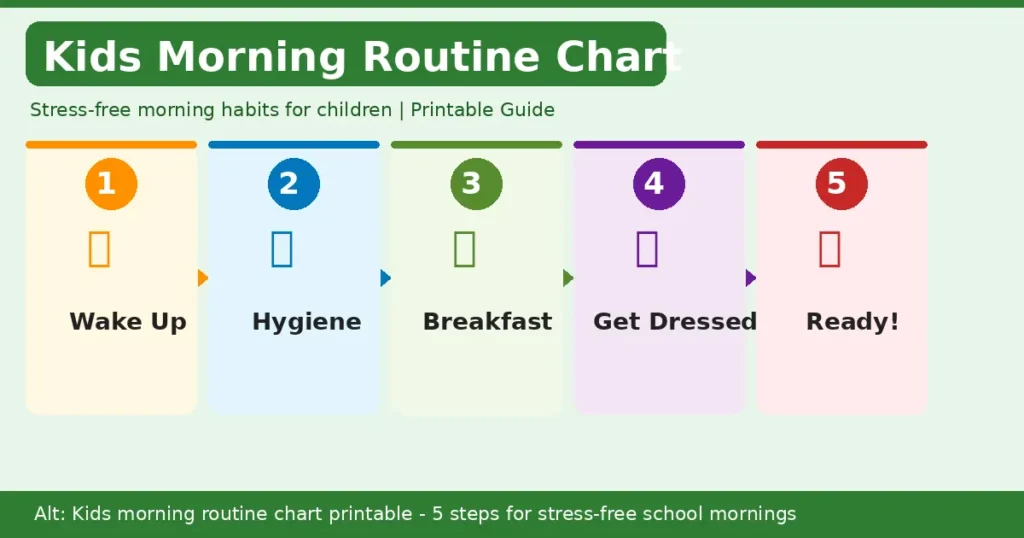
A smooth kids-getting-ready-for-school routine begins the night before. Lay out clothes, pack school bags, and prepare lunches in advance. This single habit eliminates the majority of morning stress. In the morning, wake your child 30 to 45 minutes before they need to leave. Give each task a clear time slot so children understand expectations. Use a visual schedule or a kids’ morning routine chart printable posted on their bedroom door so they can check off each task independently. Visual cues work especially well for younger children and those with ADHD.
Use a Kids Morning Routine Chart Printable
A kids’ morning routine printable chart is a game-changer for parents who want to reduce daily nagging. Create or download a chart that lists every morning task in sequence with simple pictures for younger children. Place the chart at your child’s eye level. Let your child check off each completed task using stickers or a dry-erase marker. This gives children a sense of accomplishment and builds intrinsic motivation. Many free printable charts are available online that you can personalize with your child’s name and favorite colors.
Morning Routine Tips for Busy Moms
Managing a household in the morning requires strategy. Here are the most effective morning routine tips for busy moms:
- Wake up 20 minutes before your children to have quiet, personal time
- Prepare everything possible the night before—clothes, bags, and breakfast ingredients
- Use a visual schedule so children manage themselves without constant guidance
- Create morning task stations—a spot for shoes, bags, and jackets near the exit
- Keep breakfast simple and nutritious—smoothies, boiled eggs, or overnight oats are perfect
- Play upbeat music to create a positive morning energy in the home
How to Teach Kids Morning Routine Without Battles
Learning how to teach kids a morning routine requires patience and consistency. Start by introducing one new habit at a time rather than changing everything at once. Use positive reinforcement—praise your child enthusiastically when they complete tasks independently. Create a reward system where children earn stickers or points for consistent behavior. Involve your child in designing their own routine so they feel ownership and are more likely to follow through. Keep your voice calm and encouraging, even when mornings feel chaotic. Remember that teaching takes time, and children need several weeks to internalize new habits.
Create a Stress-Free Morning Routine for Kids
Building a stress-free morning routine for kids is achievable with the right systems in place. Start with a consistent wake-up time every day, including weekends, to regulate your child’s internal clock. Eliminate decision-making in the morning by preparing everything the night before. Reduce screen time before school, as it often creates resistance when it is time to transition. Instead, allow a small reward—like five minutes of reading a favorite book—after all tasks are complete. When children know what to expect and feel successful, mornings transform from a battle zone into a peaceful family ritual.
Age-Appropriate Morning Routine Guide for Children
Every child is different, but here is a general guide for healthy morning habits for children at different ages:
Ages 3–5: Toddlers and Preschoolers
Focus on simple, repetitive tasks. Use picture-based charts. Parents guide each step but encourage independence for easy tasks like putting on shoes or brushing teeth with supervision.
Ages 6–10: Early School Age
Children can complete most tasks independently with the help of a checklist. Introduce time awareness by giving each task a time limit. Encourage self-dressing, self-hygiene, and packing their own bags.
Ages 11–14: Pre-teens and Teens
Older children manage their routines almost entirely on their own. Parents provide reminders only when necessary. Teens benefit from setting their own alarm, preparing their own breakfast, and managing their time independently.
Final Thoughts
Building a strong morning routine for kids is one of the greatest gifts you can give your child. It teaches discipline, self-reliance, and time management—skills that serve them throughout their entire lives. Start small, stay consistent, and celebrate every small win along the way. Whether you use a kids’ skills morning routine chart printable, a visual schedule, or simple verbal reminders, the key is to make the routine predictable, positive, and age-appropriate. With a little planning and a lot of patience, every morning can become a confident, joyful start to a great day.